Permanent Lighting
Will Permanent Lighting Damage My Roof, Soffit or Fascia? A Birmingham Homeowner's Guide
New Age Lights • August 2026 • Birmingham, AL • 8 min read
This is the question we hear most once price is out of the way, and it deserves a plain answer rather than reassurance. Over the mountain there are slate roofs that have lasted ninety years and copper gutters that cost more than the lighting. Out in Hoover and Shelby County there are roofs under warranty on houses still being paid for. This post walks through exactly where the hardware goes, how the wire travels, what changes for each roof and trim type in the metro, and what is left behind if you ever change your mind.
Where the track actually goes
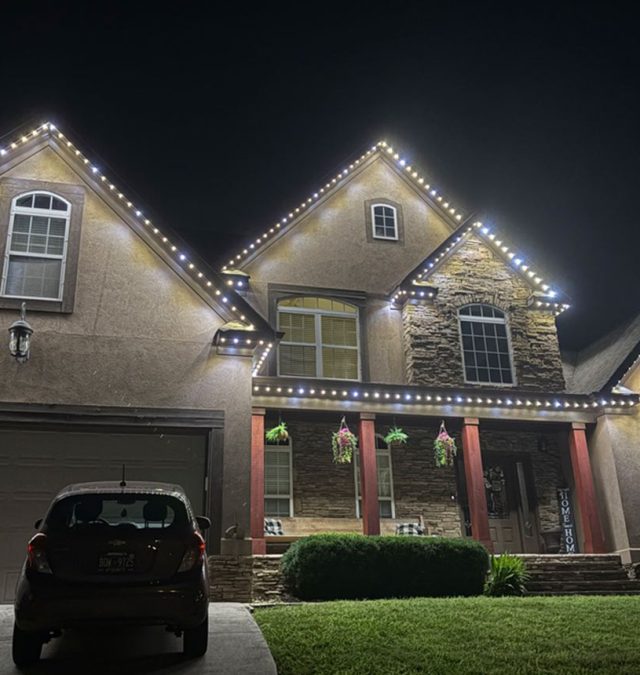
Permanent roofline lighting is a slim aluminum channel, color-matched to your trim, that carries the lights and the wiring. It mounts along the edge of the roof, but not on the roof. The two mounting surfaces are the fascia, the vertical board that runs along the eave and that gutters hang from, and the soffit, the horizontal underside of the eave. Depending on the fixture and the profile of your edge, the track seats against one or the other, tucked up under the drip edge so it disappears in daylight.
The fasteners go into the fascia or soffit, not into, under or through the roof covering. That is the whole answer to the roof question, and it is the same principle your gutter installer worked to: a row of gutter hangers is already fastened into your fascia, and the lighting track is a second, lighter row.
The two systems we install, JellyFish Lighting and Bosso Smart Lighting, both work this way. They have different fixture profiles, which is why one often seats more discreetly than the other on a given edge, but neither one ever involves the roof surface.
Do permanent lights damage the roof or soffit?
Not when they are installed properly. Nothing is nailed, stapled or screwed through shingles, slate, tile or metal panels. The soffit takes small fasteners, the same as a soffit vent or a floodlight, and the fascia takes small fasteners, the same as gutter hangers. Both are designed to carry hardware.
The damage stories you may have heard almost always trace back to staples through shingles from a DIY seasonal job, adhesive consumer strips pulling paint or wrap off a fascia on removal, or wire run across the roof surface instead of inside the track. None of those describes a professional dealer install, and if anyone proposes one on your house, that is the moment to stop.
How the wire reaches the controller
Both systems are low voltage. The wiring runs inside the track along the roofline. At some point it has to leave the roofline and reach the controller, which is a waterproof, UL-rated unit for Bosso and a compact unit for JellyFish, and in both cases it wants to live somewhere dry, ventilated and reachable, usually the garage.
The path down is planned at the consult, not improvised on install day. On most Hoover, Trussville and Chelsea houses the run drops down an inside corner or behind a downspout, passes through the soffit into the attic or garage ceiling, and reaches the controller from inside. A detached garage or a long distance from roofline to power means a longer route, worked out at the consult. Every penetration is sealed, and no wire is ever laid over shingles, because that is precisely how water finds its way under them.
The controller then needs a proper circuit. That is an electrical requirement, not a lighting one, and it is one of several reasons permanent lighting is not a weekend project.
Sealing, water and a central Alabama winter
Birmingham's winter is wet more than it is cold. December averages a high near 55°F and a low near 36°F, winter is the wettest season, and the pattern is weeks of soaking followed by overnight freezes and mid-morning thaws, with an ice event every few winters. That cycle pulls a cheap seasonal clip loose in January, and it is what a permanent installation has to be designed around from the start.
Three things handle it. The track is aluminum and does not care about rain. The lights are sealed fixtures rated for outdoor use, with a 50,000-hour rating from both manufacturers. And every place the system meets the house, from fastener heads to the soffit penetration to the controller enclosure, is sealed on install day. Water is what damages houses, and a properly installed track gives it no new way in.
What changes with each Birmingham roof and trim type
The housing here splits along Red Mountain, and so does the mounting plan. Here is what we do differently on each surface we see across the metro.
| Roof or trim type | Where you see it | How the track mounts | What we watch for |
|---|---|---|---|
| Slate or tile roof | Mountain Brook, Homewood's Edgewood and Hollywood, older Vestavia Hills crest streets, Redmont | Fascia line only; the roof covering is never touched | Brittle material, so the lift and the crew stay off it entirely; deep decorative eaves mean the run is designed around the trim |
| Copper or half-round gutter | 1920s to 1950s brick and stone over the mountain | Track seats on the fascia above or behind the gutter; fixture profile decides which system | Nothing is fastened to the copper; we choose the fixture that seats flush in the gap that exists |
| Painted wood fascia | Most pre-1970 housing, Forest Park, Highland Park, the Cahaba Project | Fasteners into sound wood, sealed | We check for soft or rotted sections at the consult; rot gets fixed by a carpenter before a track goes on it, not covered up |
| Aluminum-wrapped or vinyl fascia | Hoover, Ross Bridge, Greystone, Liberty Park, newer Trussville, Chelsea | Fasteners through the wrap into the wood behind, sealed | The most straightforward surface in the metro; the cost driver is height, not hardware |
| Brick returns with little or no fascia | Some ranches and Tudor gable ends | Soffit or trim board where one exists; we design around the brick | Drilling masonry is a last resort we discuss with you first, and often the answer is to end the run where the trim ends |
| Exposed rafter tails and deep Craftsman eaves | Homewood bungalows, Forest Park, Highland Park | Fascia board above the tails, or a seasonal display if no track will sit invisibly | If we cannot make it disappear in daylight we say so rather than bolt equipment to a 1925 elevation |
The pattern is simple. New stock in Hoover and Shelby County is easy on hardware and hard on height. Old stock in Mountain Brook and Homewood is reachable but every edge is different, sometimes house to house on one street. That is why we measure and look at the actual fascia before we quote, and why we bring both systems to the consult. Which fixture seats cleanly on your edge is the subject of our JellyFish vs Bosso comparison for Birmingham.
Historic districts and HOAs
In Forest Park, Highland Park and Redmont, and in Trussville's Cahaba Project, the daytime appearance of anything on the exterior carries as much weight as how it looks lit. Exterior changes in a local historic district may be subject to design review, so check before you commit. The points that tend to matter to reviewers are the same points that matter to you: the track is color-matched to the trim and reads as trim, it fastens to fascia rather than to historic roofing, and it is reversible.
HOAs in Hoover, Liberty Park, Greystone and down the 280 corridor tend to ask about brightness, color and hours rather than mounting, but they sometimes ask how the system attaches, and the honest answer, fascia and soffit only with no roof penetration, is usually the one they want. We cover the approval process in permanent outdoor lighting and HOAs in Birmingham.
If you ever remove it
We have not had many people ask, but you should know the answer before buying something described as permanent. The track unscrews from the fascia, the controller comes off the garage wall, and the wire penetration through the soffit is sealed and painted. What remains is a row of small fastener holes along the fascia, filled and painted the same way a gutter installer's holes would be. The roof was never touched, so there is nothing on the roof to repair.
Warranty and who is responsible
Both systems carry a five-year parts warranty from the manufacturer. JellyFish covers parts, labor and service bumper-to-bumper in year one; Bosso covers labor in year one. On top of that, New Age Lights warranties its workmanship and services every system it sells. If a run drops out in year three, you call (205) 382-8991 and our crew comes out from downtown; you are not routed to a manufacturer's support line. We are insured, every fastener location is agreed before install day, and more answers are on our Birmingham FAQ. The manufacturer's own installation and warranty details are published on the JellyFish Lighting site.
Frequently asked questions
Do permanent lights damage the roof or soffit?
No, not when they are installed properly. The track fastens along the fascia board or the underside of the soffit, the same surfaces your gutters already hang from. Nothing is nailed, stapled or screwed through shingles, slate, tile or metal roofing, and the roof covering is never penetrated. What is left in the fascia is a row of small fastener holes, which is exactly what a gutter hanger leaves.
What about slate and tile roofs in Mountain Brook and Homewood?
We never touch them. Slate and tile are brittle, expensive to repair and easy to crack, so on the 1920s to 1950s houses over the mountain we work off the fascia line entirely. The track sits under the drip edge on the fascia or soffit and the roof covering is not part of the installation at all.
How does the wire get from the roofline to the controller?
The system is low voltage, and the wiring runs inside the track. Where it has to leave the roofline it drops down an inside corner or behind a downspout, or passes through the soffit into the attic or garage, and every penetration is sealed. The controller lives somewhere dry and serviceable, usually the garage, on a proper circuit. No wire is laid across shingles.
What happens if I ever want it removed?
The track unscrews from the fascia, the controller is unplugged and removed, and the wire penetration through the soffit is sealed and painted. What remains is a line of small filled fastener holes along the fascia, the same footprint as a run of gutter hangers. The roof itself was never touched, so there is nothing on the roof to repair.
See exactly where every fastener would go
At the free consult we walk your roofline, show you the mounting surface, the wire path and the controller location, and give you a fixed quote. Nothing touches your roof.
Get a free quote or call (205) 382-8991.