Permanent Lighting
Permanent Outdoor Lighting and HOAs in Birmingham: Rules, Approvals and How to Get a Yes
New Age Lights • August 2026 • Birmingham, AL • 8 min read
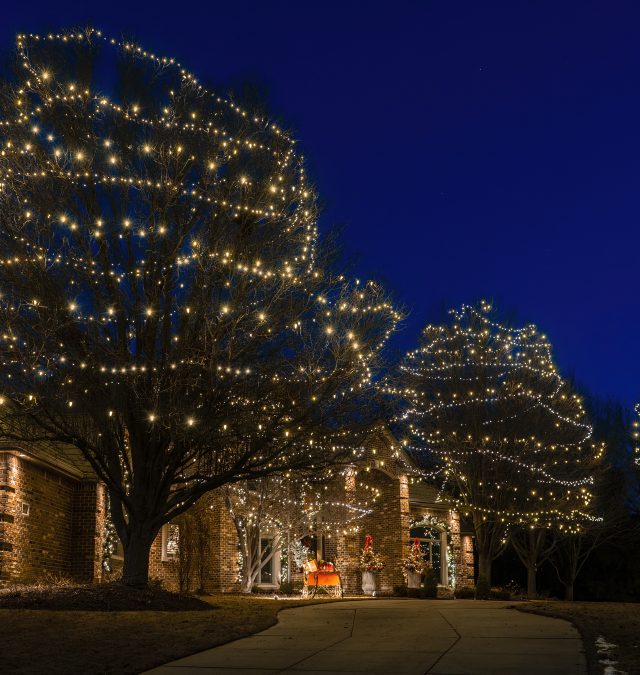
Around Birmingham the HOA question comes up on nearly every permanent lighting consult south of Red Mountain. Hoover's Riverchase, Ross Bridge and Greystone, Liberty Park in Vestavia Hills, Highland Lakes and the subdivisions filling in along 280 through Chelsea, and the newer neighborhoods east of Trussville along 11 and 59 are almost all governed by covenants, and a good many of them have an architectural review committee that has to sign off on exterior changes. That is not an obstacle. It is a process, and it goes smoothly when you know what the committee is actually worried about and hand them the answers before they ask.
Why Birmingham has so much HOA territory
The metro's growth for the last thirty years has been in planned subdivisions, and planned subdivisions come with covenants. Over the mountain, the 1920s to 1950s neighborhoods of Mountain Brook, Homewood and the older Vestavia Hills crest streets mostly predate the modern HOA, so the question there is rarer and the concern is more often a historic district than a committee. Out in Hoover, Chelsea and the newer parts of Trussville, straight fascia and tall elevations make permanent lighting the obvious product, and covenants make the approval step part of the job.
Committees are not against lighting. They are against surprise, against a street that stops looking uniform, and against the one house that runs a flashing rainbow at midnight in July. Address those three and the conversation is short.
What architectural review committees actually worry about
Every set of covenants is worded differently, but the underlying concerns are consistent. Here is each one and how a professionally installed system answers it.
| Committee concern | What they are picturing | How the system answers it |
|---|---|---|
| Daytime visibility | A visible strip of plastic or a row of bulbs along the roofline all year | The track is aluminum, color-matched to your fascia or trim, and seats under the drip edge; from the street it reads as trim. This is the single most persuasive point, and a daytime photo of an installed house makes it for you. |
| Color | Christmas colors in March, or a permanently colored house | Both systems run a warm white that looks like good architectural lighting. Colors are scenes you choose for holidays and game days, not the default. You can state in writing that warm white is the everyday setting. |
| Brightness | A house that lights up the neighbor's bedroom | Both systems dim. A full-bright JellyFish white puck draws under one watt; the lights are meant to outline, not floodlight. Commit to a brightness level if asked. |
| Hours | Lights on all night | Both apps run schedules. Bosso adds sunrise and sunset timers. A dusk-to-eleven schedule, or whatever the covenants specify, is a setting, not a promise. |
| Motion and flashing | Chasing, strobing, animated patterns | Chases and fades are optional scenes. The everyday setting is a still warm white, and you can commit to motion only on specific days. |
| Attachment and permanence | Holes in the roof, wires across shingles, damage on removal | The track fastens to fascia and soffit only, wiring runs inside the track and reaches the garage through a sealed penetration, nothing touches the roof covering, and removal leaves the footprint of a gutter hanger. Our guide to permanent lighting and roof damage in Birmingham covers it in detail. |
| Neighbor impact | Glare and spill onto adjacent lots | The lights sit under the eave and light the fascia and the ground immediately below; they are not aimed at anything. |
Read your covenants before you call anyone
Pull the declaration of covenants and the architectural guidelines and search for a few phrases: exterior lighting, holiday decorations, alterations to the exterior, and flashing or colored lights. You are likely to find one or more of the following.
- An exterior-alteration clause requiring committee approval for any change to the outside of the house. Permanent lighting is a change, so this is the clause you are applying under.
- A holiday-decoration window, setting dates when seasonal displays may go up and must come down. A permanent track running warm white is architectural lighting, not a decoration, and your application should say so plainly. Commit to running seasonal colors only inside the window.
- A prohibition on flashing or colored exterior lighting. Read the wording. Some clauses target permanent colored fixtures, which a warm-white default answers; others are broad, and you should ask the committee how they interpret them before you commit.
- Nothing at all. Older or lighter-touch covenants sometimes do not mention lighting. Apply anyway. Approval in writing protects you if the board changes.
What to submit to your architectural review committee
A complete application gets approved faster than a persuasive one. This is what we provide for either of the two systems we install, and what a committee generally wants to see.
- The manufacturer spec sheet for the system, JellyFish Lighting or Bosso Smart Lighting, showing the fixture, the track profile and the low-voltage controller.
- A photo or elevation drawing of your house with the run marked, so the committee can see exactly which fascia lines are involved and which are not.
- The track color you have chosen and how it matches your trim. A daytime photo of a similar installed house in the neighborhood does more than any paragraph.
- A short statement of intended use: warm white on ordinary evenings, colors for named holidays and game days, no motion except on those days.
- Your planned schedule and off time.
- A description of how the system attaches: fascia and soffit only, no roof penetration, sealed wiring path to a controller in the garage.
- Your installer's insurance certificate. New Age Lights is insured and supplies it on request.
Submit before you sign anything. Our quote is free and fixed, and nothing is ordered until you approve it, so there is no cost to getting the committee's answer first. If the covenants set specific limits on brightness, color or hours, bring them to the consult and we design inside them from the start. It is far cheaper than re-running a job after a board meeting.
Historic districts are a different conversation
Forest Park, Highland Park and Redmont in the city, and the Cahaba Project in Trussville, are not asking whether your house will match the neighbors'. They are asking whether anything is being lost. Exterior changes in a local historic district may be subject to design review, and you should find out before you commit rather than after.
The points that tend to carry weight are the same ones that make the system a good fit for those streets in the first place. The track is color-matched and reads as trim, so the daytime appearance of the house is unchanged from the sidewalk. It fastens to the fascia and never to historic slate, tile or roofing. It is reversible, and removal leaves the footprint of a gutter hanger. And on the 1920s houses where the trim genuinely will not carry a track discreetly, we say so and recommend a seasonal display designed around the detail instead. A fixture that is visible in daylight on a Forest Park elevation is the wrong answer regardless of what a committee says.
How to keep the yes
Approval is the start of a relationship with your neighbors. Run warm white as the default and let the schedule handle it. Save your colors for the days that matter, and on a street split between Tuscaloosa and Auburn be gracious about it; our game day lighting guide for Birmingham covers the etiquette. Set a sensible off time, dim on close-set lots, and if a neighbor asks what it is, show them the daytime view. The fact that they had to ask is the point.
If the answer is no
A flat no is uncommon, and a conditional no is usually one item away from a yes: a different track color, a brightness cap, a fixed off time or a written commitment to warm white on ordinary nights. Ask what specifically was objected to and address that item.
If the covenants genuinely prohibit it, the fallback is a professionally installed seasonal display, designed around your trim, that goes up and comes down inside the holiday window. And it is worth turning the conversation around. HOA entrances, gatehouses, clubhouses and common areas are exactly the frontage permanent lighting was built for, and boards that see it on their own monument sign tend to look at homeowner applications differently. We do that work too; see commercial and HOA lighting in Birmingham. General questions are answered on our FAQ.
Frequently asked questions
Do HOAs allow permanent outdoor lighting?
Most do, with conditions. The concerns architectural review committees raise are daytime visibility, color, brightness, hours and how the system attaches to the house. A color-matched track that reads as trim in daylight, runs warm white most nights, dims, follows a schedule and fastens to the fascia rather than the roof answers all five. The approval usually turns on submitting that information clearly rather than on the product itself.
What should I submit to my architectural review committee?
The manufacturer spec sheet, a photo or drawing of your elevation with the run marked, the track color you have chosen and how it matches your trim, a short statement of intended use such as warm white nightly with colors on holidays and game days, your planned schedule and hours, and your installer's insurance. New Age Lights provides all of these for either system it installs.
Do holiday-decoration date windows apply to permanent lights?
Many Birmingham-area covenants set a window for holiday decorations, such as a date by which they must come down. A permanent system running warm white as architectural trim is not a holiday decoration, and most committees treat it as exterior lighting instead. Say so in the application, and commit to running seasonal colors only inside whatever window the covenants set.
Are historic districts different from HOAs?
Yes. In Forest Park, Highland Park, Redmont and Trussville's Cahaba Project the question is preservation rather than uniformity, and exterior changes may be subject to design review. The points that matter are that the track is color-matched and reads as trim, that it fastens to fascia rather than to historic roofing, and that it is reversible. Ask before you commit, and bring any rules to the consult.
What if my HOA says no?
Ask what specifically they objected to, because it is usually one item that can be addressed: a different track color, a brightness cap, a fixed off time or a written commitment to warm white on ordinary nights. If it is a flat no, a professionally installed seasonal display designed around your trim is the fallback, and it is worth suggesting the HOA light its own entrances and common areas, which New Age Lights also does.
Bring your covenants to the consult
We will design inside your HOA's rules from the start, supply everything the committee needs to see, and give you a fixed quote you can hold until they say yes.
Get a free quote or call (205) 382-8991.