Christmas Lighting
Christmas Light Design Ideas for Birmingham Homes
New Age Lights • September 2026 • Birmingham, AL • 8 min read
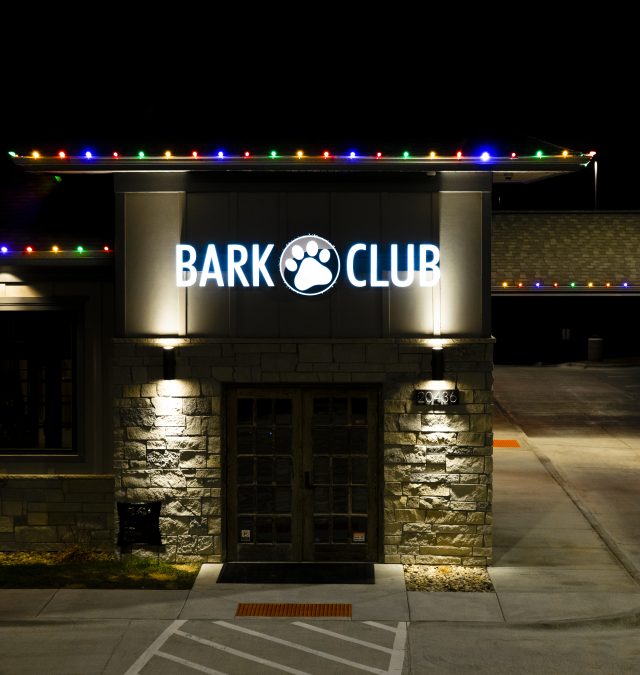
Most Christmas light displays fail for the same reason: they were designed in a store aisle rather than from the curb. This post is about designing from the curb, using the housing we actually work on in the Birmingham metro.
Start with the roofline, and decide what to leave off
The roofline is the display. Everything else is accent. A continuous, evenly spaced line of C9 along the eaves and up the gables gives the house a shape at night, and it is the part that reads from a moving car on a wet December evening.
The design decisions are about what to include:
- Eaves and gables the street sees. Always. This is the minimum, and on many houses it is also the best-looking version.
- The ridge. Worth adding when the house is seen from below or across a valley, because the ridge completes the silhouette. Less useful when the house is seen head-on through trees.
- Dormers and returns. On a detailed 1920s roofline, lighting every dormer can turn a clean outline into clutter. Often the eave line alone is stronger.
- Rear elevations. Usually left off, unless you entertain on a deck or the rear faces a road. On sloping Hoover and Chelsea lots the rear is also a story taller and correspondingly more expensive to light.
Runs should follow the architecture: turn where the roof turns, hold spacing across the elevation, and stop at a corner rather than mid-line. That is why professional runs are cut to the house on site.
C9 vs mini lights
Bulb size decides what a display looks like from the street. The two options do different jobs and most good designs use both.
| C9 LED bulbs | Mini lights | |
|---|---|---|
| Best use | Roofline, ridge, gables, long straight lines | Wrapping tree trunks, columns, shrubs, railings, garland |
| Look from the street | Distinct, evenly spaced points that read as an outline | A soft glow; individual bulbs disappear at distance |
| Through tree canopy | Carries well; the outline survives partial screening | Blurs into the branches |
| Fit to the house | Commercial runs are cut to the roofline with consistent spacing | Fixed retail lengths; fine for wrapping where length is forgiving |
| Durability in a wet winter | Commercial-grade sockets and sealed connections hold up | Retail strings are the first thing to fail in freeze-thaw |
Nearly every professional roofline in the metro is C9. Minis belong on the things you wrap; run along a gutter they make the house look fuzzy from across the street.
Warm white vs cool white vs multicolor
Color temperature is the decision people agonize over and the one with the clearest answer for local housing.
| Option | Looks best on | Watch out for |
|---|---|---|
| Warm white | Brick, stone, slate, painted wood trim, anything traditional; almost every over-the-mountain house | Very little; it is the safe default for a reason |
| Cool white | Modern white or gray exteriors, some commercial frontages, snow-themed designs | Reads blue and harsh on dark brick and under trees |
| Multicolor | Family-facing displays, ranch and bungalow rooflines, yard trees | Fights with detailed architecture; check HOA rules |
| Red and white, or red and green | A classic, restrained alternative to full multicolor | Red alone can look sparse on a long line |
| Color-changing RGB | Anyone who wants warm white most nights and color on some | Higher cost in a seasonal program; consider permanent if you want it year-round |
Warm white wins in Birmingham more often than anywhere we work, and the tree canopy is part of the reason. Mountain Brook and Homewood have mature hardwoods over most streets, so a display is read in fragments through branches rather than as a single clean outline. Warm white survives that; cool white and busy multicolor turn into visual noise.
Design by Birmingham house style
The metro splits along Red Mountain, and the split runs through the design as much as the install. Here is what suits the housing we see most.
1920s to 1940s brick and stone Tudors: Mountain Brook, Crestline, English Village
Steep pitches, slate and tile, deep decorative eaves and very little straight fascia. These houses do not want everything lit. A warm white C9 line along the main eave and up the primary gable, fixed to fascia and drip edge rather than clipped to a gutter, gives the roofline a shape without fighting the detail. Add a wreath on the front door, garland at the entry and wrapped columns if the porch has them. Leave the dormers alone. Under the canopy, restraint reads as expensive. What those installs involve is on the Mountain Brook page.
Bungalows and cottages: Edgewood and Hollywood in Homewood
Modest lots, big street trees, porches with real presence. Here the porch is the design. Outline the porch roof and the main eave in C9, wrap the porch columns in warm white minis, hang a wreath in the gable or over the door, and light the shrubs along the front. Because most Homewood houses are within genuine reach, this is also where a well-built seasonal display is best value. See the Homewood page.
Mid-century on the crest: older Vestavia Hills streets
Houses along the crest of Shades Mountain are seen from below as often as from their own curb, so the silhouette does more work than the detail. Outline the full roofline including the ridge, keep the color to warm white so the shape stays crisp at distance, and skip fussy accents that disappear from the valley. Where fascia is shallow or interrupted, the run goes on the edge that exists and the design follows it. More on the Vestavia Hills page.
Tall two- and three-story new builds: Hoover, Ross Bridge, Greystone, Liberty Park, Chelsea
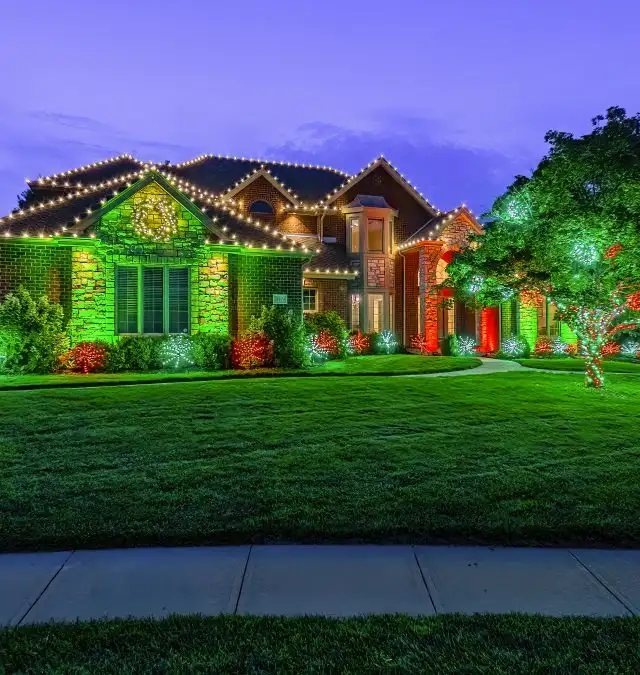
Straight fascia, seamless gutter, wide frontages and a big gable over the entry. These houses take a full roofline outline beautifully because the lines are long and simple. Run C9 along every front eave and up every front gable, add a lit ridge if the house sits above the street, and frame the entry with garland and a wreath. Wrapped trees in the yard balance the height. The rear is usually left off because it is a story taller and faces woodland. This is also the stock where a permanent track is often the better long-term answer; see permanent versus seasonal.
Historic districts: Forest Park, Highland Park, Redmont
Daytime appearance carries as much weight as the lit result. The fixture has to disappear when it is off, which means fascia-mounted C9 chosen for the trim, warm white only, and nothing that reads as decoration bolted to a historic elevation. Outline the main roofline and the entry, use a wreath and garland for warmth, and stop. Bring any district or association guidance to the design consult and we work inside it from the start.
Cahaba Project cottages: Trussville
New Deal-era planned streets of modest, carefully detailed houses. The streetscape is coherent, so a display that respects the neighbors looks better than one that competes with them. A short warm white C9 line on the main eave, a wreath, and lit shrubs is usually right. Fascia, drip edge and gutter vary house to house, so the clip is chosen per edge on site.
Accents that earn their place
- Wreaths. One large lit wreath centered on the gable or over the door beats three small ones.
- Garland. Along a porch rail, around the door or over a garage, it hides the transition from roofline to ground.
- Columns. Wrap top to bottom in warm white minis. Half-wrapped columns look unfinished.
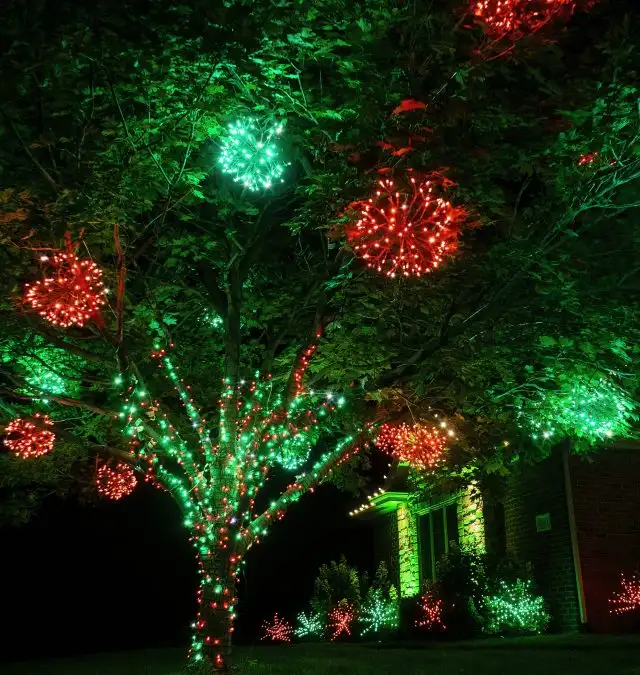
- Tree wraps. One wrapped yard tree gives depth, and on a wooded Mountain Brook lot it pulls the eye to the house through the canopy.
- Walkway and landscape. Lit shrubs or path stakes ground the display. Keep them warm white to match.
The color-changing option
Color-changing RGB runs give you warm white on an ordinary Tuesday, red and green on Christmas Eve, and crimson and white or orange and blue on a fall Saturday, from a remote or an app. In a seasonal program RGB costs more than fixed warm white and comes down in January like everything else. If you want that flexibility all year, a permanent JellyFish or Bosso track offers 16 million colors, saved scenes and schedules from your phone in a channel color-matched to the trim. The game-day angle is in game day lighting in Birmingham.
Keeping it HOA-friendly
Around Greystone, Ross Bridge, Liberty Park and the Chelsea subdivisions, associations are common and the complaints are almost always about brightness, color and hours. Warm white or a restrained palette, roofline and entry rather than every surface, and a timer so it is off overnight rarely draws a letter. Bring the rules to the consult and we design inside them. The HOA side of permanent lighting has its own post: permanent outdoor lighting and HOAs in Birmingham.
Commercial storefront design
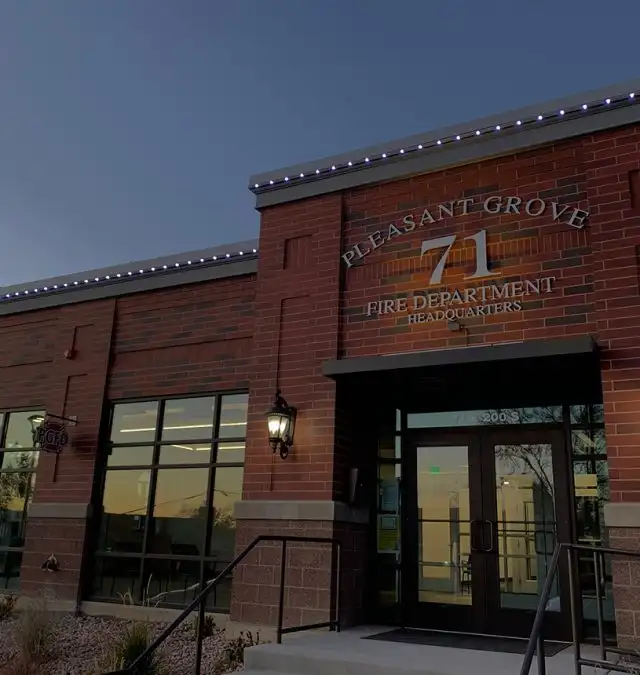
In the Mountain Brook villages, on Homewood's 18th Street, in Avondale, Lakeview and Five Points South, an unlit facade beside a lit one loses on a Friday, so the goal is a frontage that reads as architecture rather than decoration. Outline the parapet or cornice in warm white C9, frame the entrance and windows, and keep the color consistent so the building reads as one piece. Downtown and Parkside brick and steel want a cleaner line than a retail pad at The Summit or Patton Creek, which can carry more. The scope is on our commercial and HOA lighting page, and the Birmingham districts are covered in commercial and HOA Christmas lighting in Birmingham.
Frequently asked questions
Should I use C9 or mini lights on my roofline?
C9 for the roofline, mini lights for wrapping. C9 bulbs are large enough to read as a clean, evenly spaced outline from the street and through tree canopy, which is why nearly every professional roofline in Birmingham uses them. Mini lights disappear at roofline distance and are better suited to wrapping tree trunks, columns, shrubs and railings.
Warm white or cool white Christmas lights?
Warm white on almost every Birmingham house. It flatters brick, stone, slate and painted wood trim, it reads as classic rather than clinical, and it carries through hardwood canopy better than cool white, which can look blue and harsh against a dark roofline. Cool white suits a small number of modern white or gray exteriors and some commercial frontages.
What parts of the roof should be lit?
Start with the eaves and gables the street actually sees, then decide about the ridge. On a house seen from below, as on the Vestavia Hills crest, the outline does the work and the ridge is often worth adding. On a house seen in fragments through trees, as in Mountain Brook, a simpler continuous line reads better than a busy one. Rear elevations are usually left off unless you entertain outdoors.
Can Christmas lights change color?
Yes. Color-changing RGB runs let you switch from warm white to red and green, or to crimson and white or orange and blue on game day, from a remote or an app. In a seasonal program the RGB option costs more than fixed warm white. If you want that flexibility every day of the year, a permanent JellyFish or Bosso system does the same from your phone.
How do I keep a display HOA-friendly?
Stay with warm white or a restrained palette, light the roofline and entry rather than every surface, use a timer so it is off overnight, and bring your association's rules to the design consult. Most complaints are about brightness, color and hours, and a design that starts inside the rules never has to be re-run after a board meeting.
Do professionals design the display or just hang what I ask for?
Both. At New Age Lights the design consult is free. We walk the property, suggest what suits the architecture and the sightline you actually have, show you where the run will sit, and price it. You approve the design before anything is ordered, and if you want something specific we build around it.
See what your roofline is asking for
The design consult is free. We walk the property, look at the house from where the street sees it, and show you the run before anything is ordered. Then you get a fixed quote, and the quote is the number.
Get a free quote or call (205) 382-8991.